

Why Solventborne Roadline Paint Performs Better on Old Asphalt
December 17, 2025
Can You Paint Road Markings on New Asphalt? What You Need to Know
January 15, 2026
Road marking paint failure is a common issue across Malaysia. Lines fade early, crack, or peel off long before their expected service life. In most cases, the problem is not the paint alone. It is a combination of climate, surface condition, paint selection, and application timing. Understanding these factors helps contractors and authorities reduce rework and long-term maintenance costs.
1. Malaysia’s Climate Affects Paint Drying and Curing
Malaysia’s hot and humid climate has a direct impact on road marking performance. High humidity slows evaporation, especially for waterborne roadline paint. When drying takes longer than expected, markings are exposed to:
- Tracking from vehicle tyres
- Smearing
- Early surface wear
Sudden rain after application can further weaken adhesion if the paint has not fully dried.
2. Asphalt Surface Condition Is Often Overlooked
Many road marking jobs are applied on asphalt that is either too old or too new. Both can cause problems if not handled correctly.
2.1 Old Asphalt: Porosity and Moisture Retention
Over time, asphalt becomes porous and retains moisture. Fine cracks and trapped dust reduce bonding strength.
If the surface is not properly cleaned and dried, paint remains on the surface instead of anchoring into the asphalt. This often leads to peeling and fast abrasion under traffic.
2.2 New Asphalt: Paint Applied Too Early
Premature failure can also happen when paint is applied too soon on freshly laid asphalt, especially with high-performance coatings such as 2-component aliphatic polyurethane (PU).
i. Asphalt Is Still Active
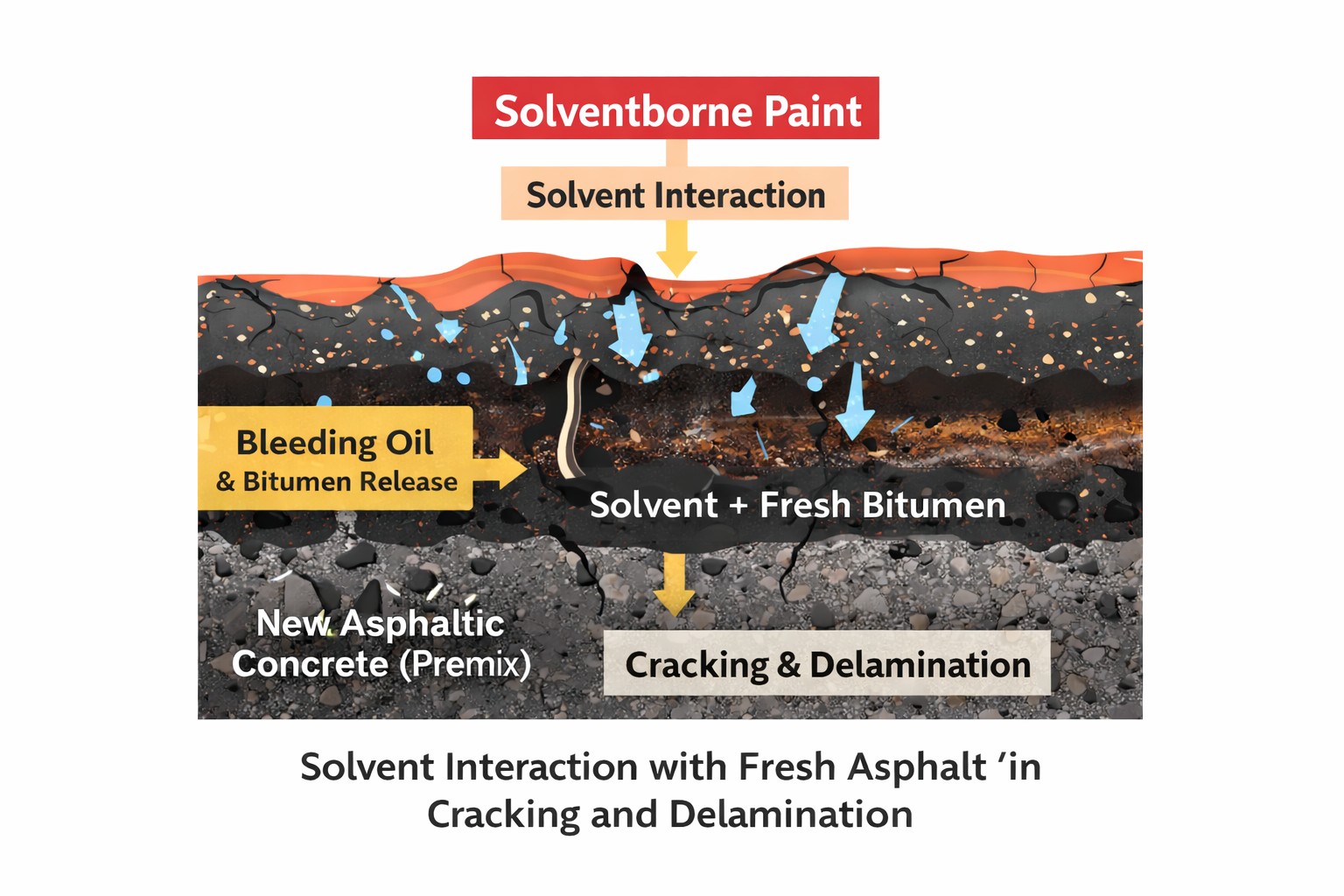
Fresh asphalt continues to release oils and bitumen for days or weeks after laying. This process, often called bitumen bleeding, prevents proper adhesion. When oils migrate upward, the coating cannot grip properly and may crack or delaminate as the asphalt continues to settle.
ii. Solvent Interaction with Fresh Bitumen
On new asphalt, solventborne paint can soften the top layer of bitumen, leading to:
- Poor film formation
- Surface softening
- Brittle cracking after solvent evaporation
iii. Thermal Movement and Flexibility Mismatch
New asphalt expands and contracts more than cured asphalt, especially under direct sunlight. Rigid coatings such as PU struggle to follow this movement, which can result in cracking.
iv. Moisture or Surface Contamination
Residual moisture, dust, or oil contamination further weakens adhesion. Even minor trapped moisture can cause bubbling or stress cracking during curing.
3. Wrong Paint Selection for Site Conditions
Paint type plays a major role in durability. Among single-component systems, solventborne roadline paint dries faster than waterborne paint. It also performs better on:
- Older asphalt
- Slightly damp or porous surfaces
- Unpredictable weather conditions
Waterborne paint can still perform well, but it requires stricter control of weather and surface condition.
For outdoor logo marking and high-wear areas, PU paint offers better UV resistance and durability, provided the surface is fully cured and properly prepared.
4. Inadequate Surface Preparation
Skipping surface preparation is a common cause of early failure. Typical issues include:
- Dust or loose aggregate left on the road
- Oil contamination from vehicles
- Moisture trapped in the asphalt
Simple steps such as sweeping, air blowing, and checking surface dryness significantly improve paint lifespan.
5. Traffic Opened Too Early
Opening traffic before the paint has adequately dried damages the marking immediately. In humid conditions, drying time is often underestimated, even for fast-drying systems.
Final Thoughts
Road marking paint failure in Malaysia is rarely caused by a single factor. Climate, asphalt condition, paint compatibility, surface preparation, and application timing all matter. By selecting the right paint system and adjusting application practices to local conditions, contractors can achieve longer-lasting and more reliable road markings.
At Crimson Rise, we invest in ongoing R&D to optimise paint performance for Malaysia’s weather and traffic conditions. Explore our range of road marking and coating products here: https://crimsonrisepaint.com/our-products/.


